Choosing FUE punches means deciding on two things at once: size and material. Diameter shapes graft survival, donor preservation and scarring, while the material determines edge sharpness, retention and whether a punch is reusable or disposable. This guide explains the options clearly so clinics and distributors can stock the right mix.
FUE punch diameters and what they control
Punch diameter is measured in millimeters and usually ranges from about 0.7 mm to 1.2 mm, with the workhorse sizes falling between 0.8 mm and 1.0 mm. The diameter is a balance, not a single right answer.
Smaller diameters (around 0.7 to 0.85 mm):
- Produce smaller wounds and finer, less visible scarring
- Preserve more of the donor area for future sessions
- Demand a genuinely sharp edge, because the margin for error is thin
- Raise transection risk if the punch is dull or technique is imprecise
Larger diameters (around 0.95 to 1.2 mm):
- Are more forgiving and capture larger multi-hair grafts cleanly
- Lower transection risk on tough or curly follicles
- Leave larger wounds and deplete the donor area faster
Most clinics keep a range and select per patient based on hair caliber, follicle grouping, skin type and how much the donor needs to be conserved. Fine single-hair work in soft skin leans small; large grafts in firm or fibrous skin lean larger.
Surgical steel punches
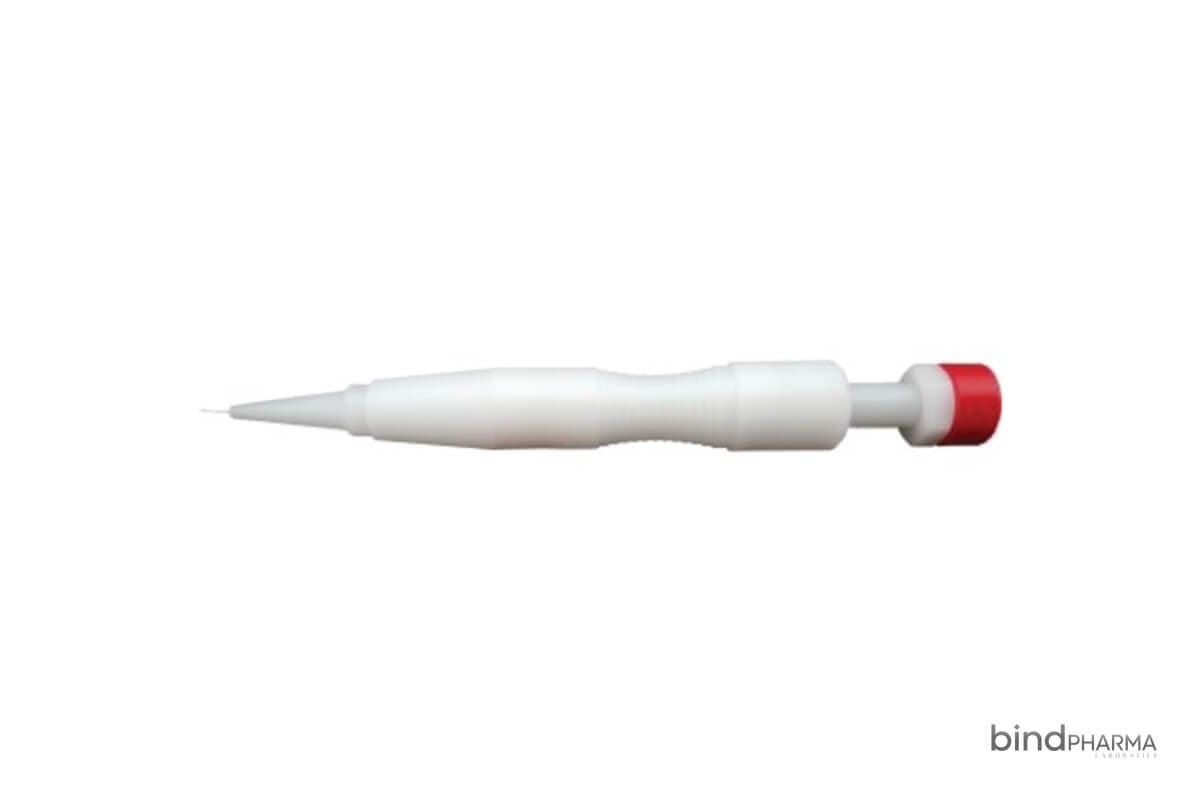
Stainless surgical steel is the traditional FUE punch material and remains widely used for good reason. It takes a very sharp edge, performs predictably, and is cost-effective — which makes it the natural choice for disposable, single-use lines where a fresh edge every case is the priority.
Steel's trade-off is edge retention over many uses. A steel edge is excellent when fresh, but it dulls faster than titanium with repeated sterilization and use. That is precisely why steel suits disposables: you get a perfect edge for the case, then discard it before it degrades.
Titanium punches
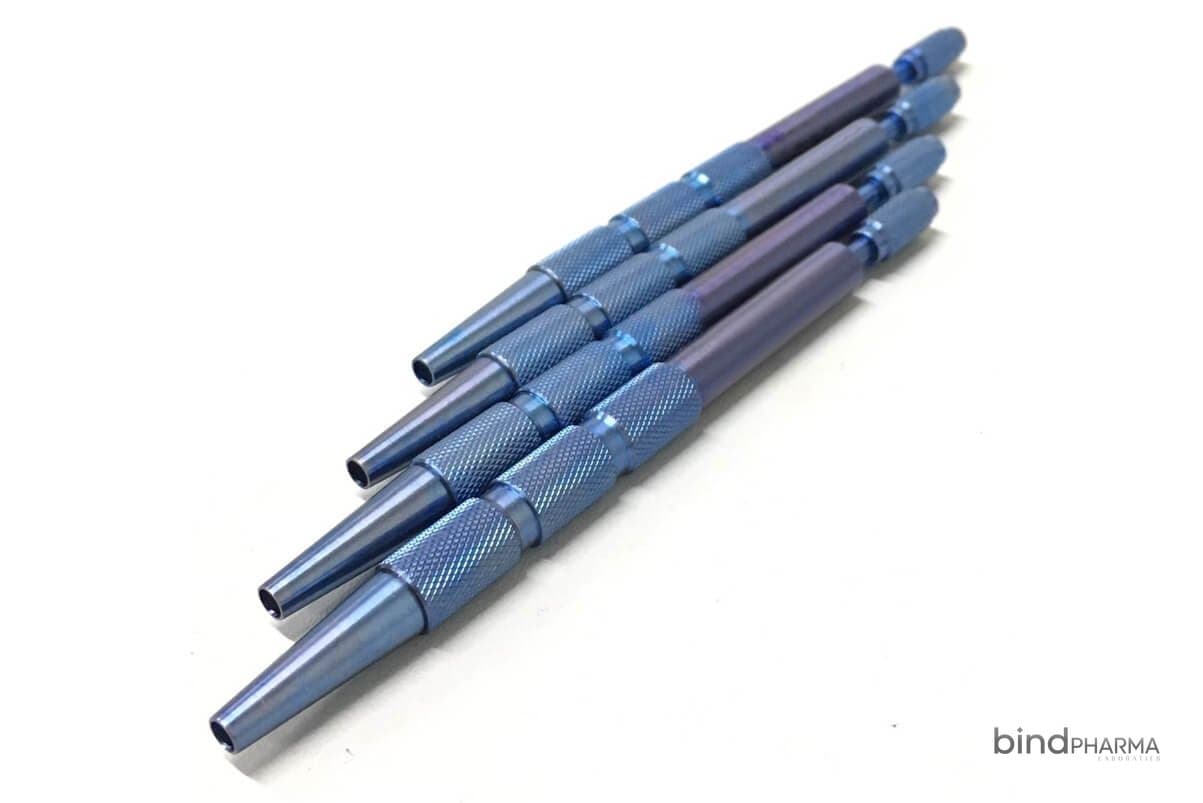
Titanium is the premium choice for reusable lines. It is lighter than steel, highly resistant to corrosion, and holds its edge well across repeated use and sterilization cycles. For a high-volume clinic, a titanium punch that stays sharp over many sessions lowers cost per case compared with constant disposable replacement.
The advantages of titanium:
- Strong edge retention across multiple sessions
- Lightweight, reducing hand fatigue during long procedures
- Excellent corrosion resistance for repeated autoclaving
- Lower long-run cost when paired with a long-term-use guarantee
Titanium is the material of choice when a clinic wants a reusable instrument it can rely on case after case, provided the manufacturer backs the edge retention with a genuine guarantee.
Sapphire blades and where they fit
Sapphire is best known in hair transplantation for recipient-site incisions rather than donor extraction. Sapphire blades are prized for their exceptional hardness, ultra-sharp and smooth edge, and ability to create clean, precise channels that can support denser, more natural placement and faster healing.
Because sapphire holds an extraordinarily sharp edge and resists dulling, it has earned a strong reputation in the recipient phase. When clinics talk about "sapphire FUE," they usually mean a workflow that pairs a high-quality extraction punch with sapphire recipient blades. Understanding this distinction matters when you stock: extraction and incision are different steps with different ideal materials.
Reusable versus disposable: how to decide
The material conversation ultimately drives the reusable-versus-disposable decision.
Reusable (typically titanium) suits:
- High-volume clinics where cost per case matters most
- Surgeons who prefer a consistent, familiar instrument
- Settings with reliable sterilization and a long-term-use guarantee in place
Disposable (typically steel) suits:
- Clinics that prioritize a guaranteed fresh edge every single case
- Workflows that want to eliminate sterilization and edge-tracking overhead
- Lower-volume or variable schedules where reuse economics are weaker
Many clinics run both: titanium reusables as the everyday workhorse, plus disposables for specific cases or as backup. Distributors, in turn, should stock both lines to serve the full range of clinic preferences.
Why material consistency matters more than the label
Whatever the material, the metric that protects your cases is consistency — punch number one cutting like punch number one thousand. Titanium that varies lot to lot, or steel with inconsistent grinding, will quietly raise transection rates regardless of the material name on the box. Manufacturer-direct sourcing, with tolerance control and traceable batches, is how you ensure the material delivers what the spec sheet promises.
This is where edge engineering earns its keep: an unmatched, market-leading edge is the product of controlled grinding and finishing, not the metal alone.
Match sizes and materials to your patients
The right stock is not a single punch — it is a deliberate range of diameters in the materials that suit your case mix, reusable and disposable. The best way to confirm a material and size perform on your patients is to test them before committing to volume.
If you want to compare titanium reusables, steel disposables and the right diameter range on your own cases, request free samples across sizes and materials. Once you have settled on the mix your clinic needs, ask for a wholesale quote and stock manufacturer-direct.