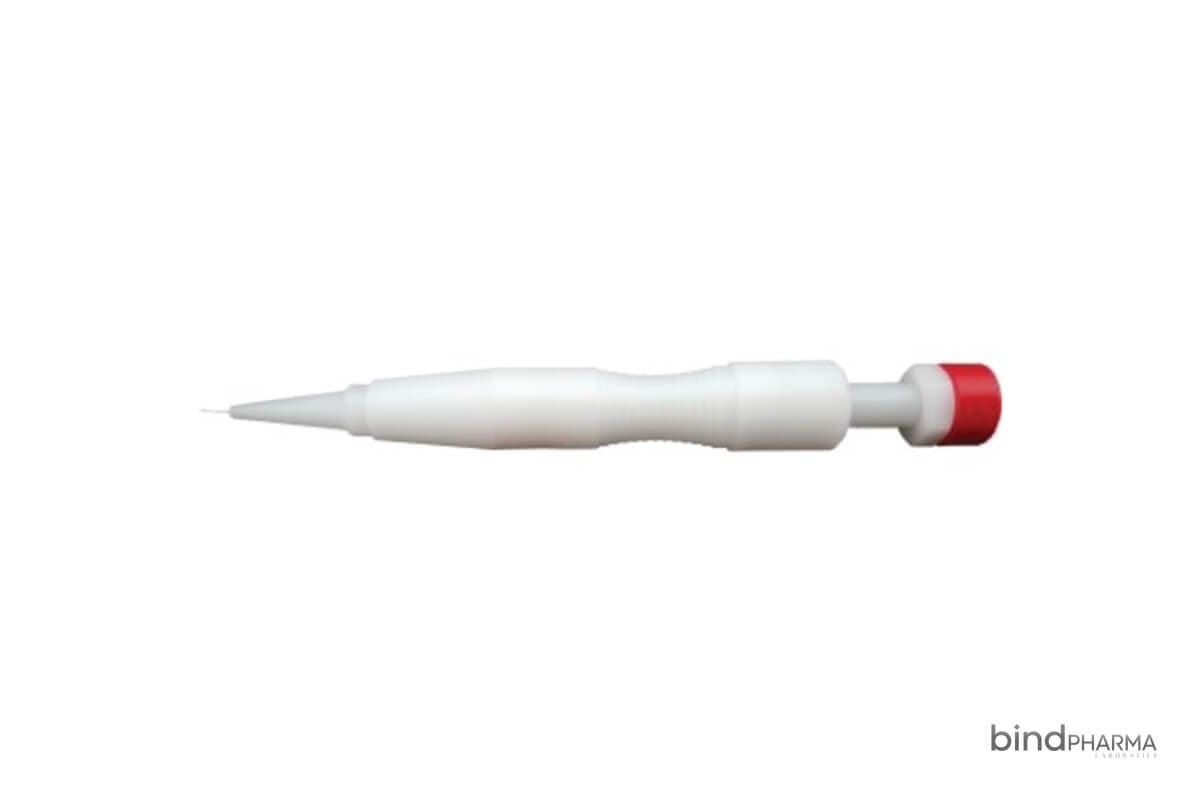
Curly and Afro-textured hair is one of the most rewarding and most demanding challenges in follicular unit extraction. The follicle curves sharply beneath the skin, and the part of the graft you can see at the surface rarely points in the direction the root actually travels. For clinics that serve Black and mixed-heritage patients, choosing the correct FUE punch is the single biggest factor in keeping transection rates low.
Why curly hair raises transection risk
In straight hair the follicle descends in a fairly predictable line, so a standard sharp punch follows the shaft cleanly. In tightly curled hair the bulb can hook almost ninety degrees within the first two or three millimetres. A punch that scores too aggressively or travels too deep on the wrong angle will sever the lower follicle, leaving a damaged graft and a wasted extraction.
The clinical consequence is real: transection rates that sit comfortably under five percent in straight hair can climb into double digits in curly hair when the wrong tooling and technique are used. Every transected follicle is a graft that may not grow.
Where serrated punches help
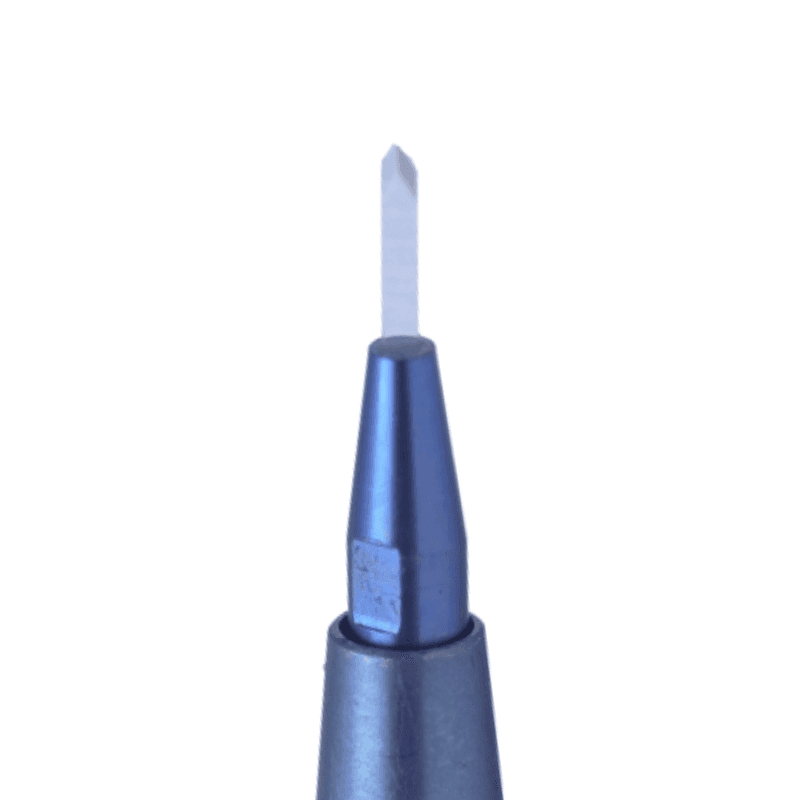
A serrated FUE punch has a toothed cutting edge rather than a single continuous bevel. That geometry does two useful things for curly hair:
- It grips and scores the skin rather than skidding, which gives the surgeon more control over the entry point on thick or fibrous scalp.
- It allows a slightly shallower scoring depth, letting the surgeon separate the upper follicle from the surrounding dermis before the curve begins, then complete the extraction by traction rather than by deep coring.
The goal is to incise only the top of the follicular unit and then ease the graft out, so the punch never has to chase the bulb around its curve. Many surgeons pair a serrated punch with a blunt or flat-tip dissection step for exactly this reason.
Punch diameter and curly hair
Curly grafts are often bulkier because the surrounding tissue and the curve itself demand a little more room. Many surgeons working on Afro-textured hair move up a size compared with what they would use on fine straight hair. A 0.9 mm to 1.0 mm hair punch is common, and some go slightly larger for very coarse hair to give the curved bulb clearance.
The trade-off is wound size versus transection. A punch that is too small saves healing time but slices follicles; a punch that is too large protects the graft but enlarges the donor wound. Testing two or three diameters on the individual patient at the start of a case is good practice.
Sharpness and edge consistency matter more here
Because curly-hair FUE relies on a clean, shallow score, edge quality is decisive. A dull or inconsistent edge tears the dermis, increases the force the surgeon must apply, and pushes the punch deeper than intended, exactly the conditions that cause transection. This is one reason high-volume Afro-hair clinics are particular about their FUE punch supplier and insist on sharp, batch-consistent edges.
Our punches are engineered to be among the sharpest on the market with tight edge tolerance from the first unit to the last in a batch, which is precisely what curly-hair work demands.
A practical workflow
- Map the curl direction on a small test area before committing to the whole donor zone.
- Start shallow. Score the upper third of the follicle and assess how the graft releases before increasing depth.
- Favour traction extraction so the punch never follows the bulb around its bend.
- Inspect early grafts under magnification and adjust diameter or depth if transection appears.
- Rotate or replace punches at the first sign of edge drag; a tired edge is dangerous in this hair type.
Stocking for a curly-hair caseload
Clinics that regularly treat Afro-textured patients should keep a range of serrated diameters on hand rather than a single size. Buying wholesale from a manufacturer-direct supplier lets you stock 0.9 mm, 1.0 mm and a coarser option without overpaying, and it keeps a fresh, sharp edge available for every case. Distributors serving multi-ethnic markets should likewise carry serrated options as a standard line.
Curly and Afro hair FUE is a technique problem and a tooling problem at once. Get the punch geometry, diameter and sharpness right, and the technique becomes far more forgiving.
If you treat curly or Afro-textured patients, request a free sample of our serrated FUE punches in several diameters and put them up against your current tooling. For standing inventory, ask us for a wholesale quote.