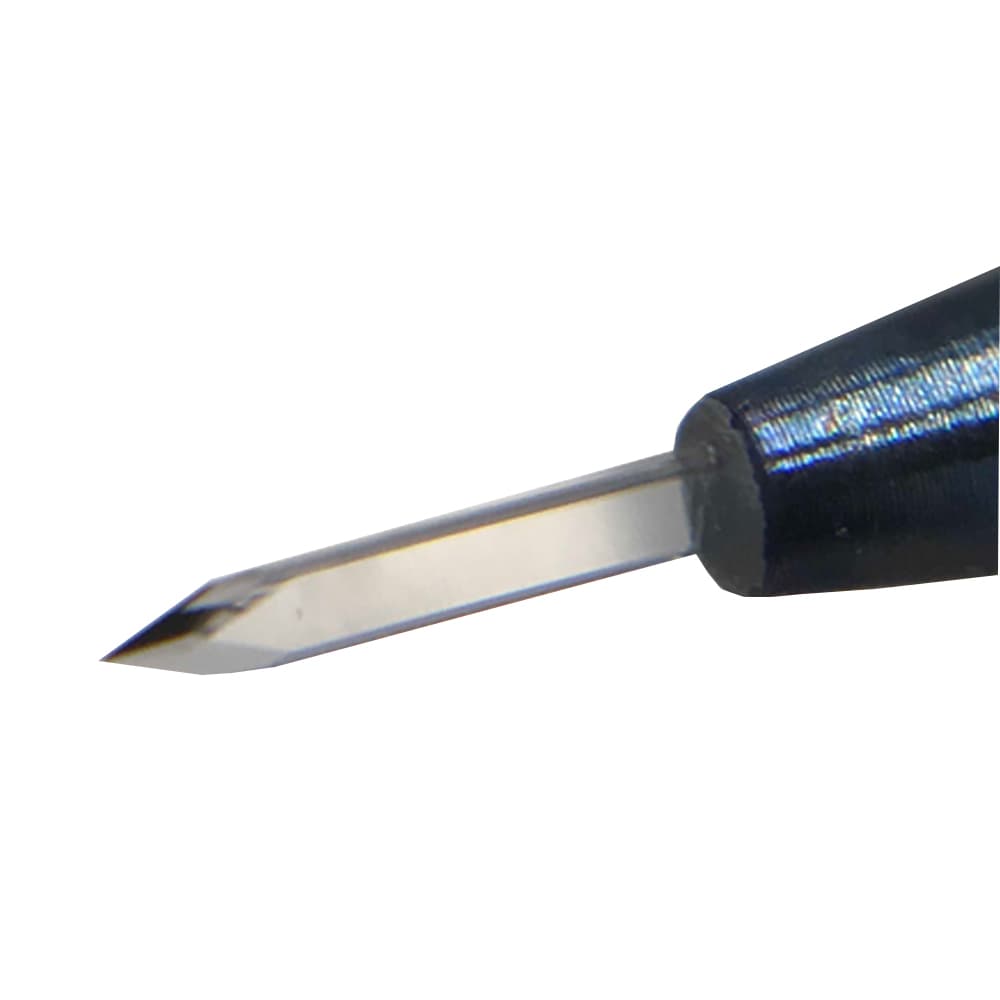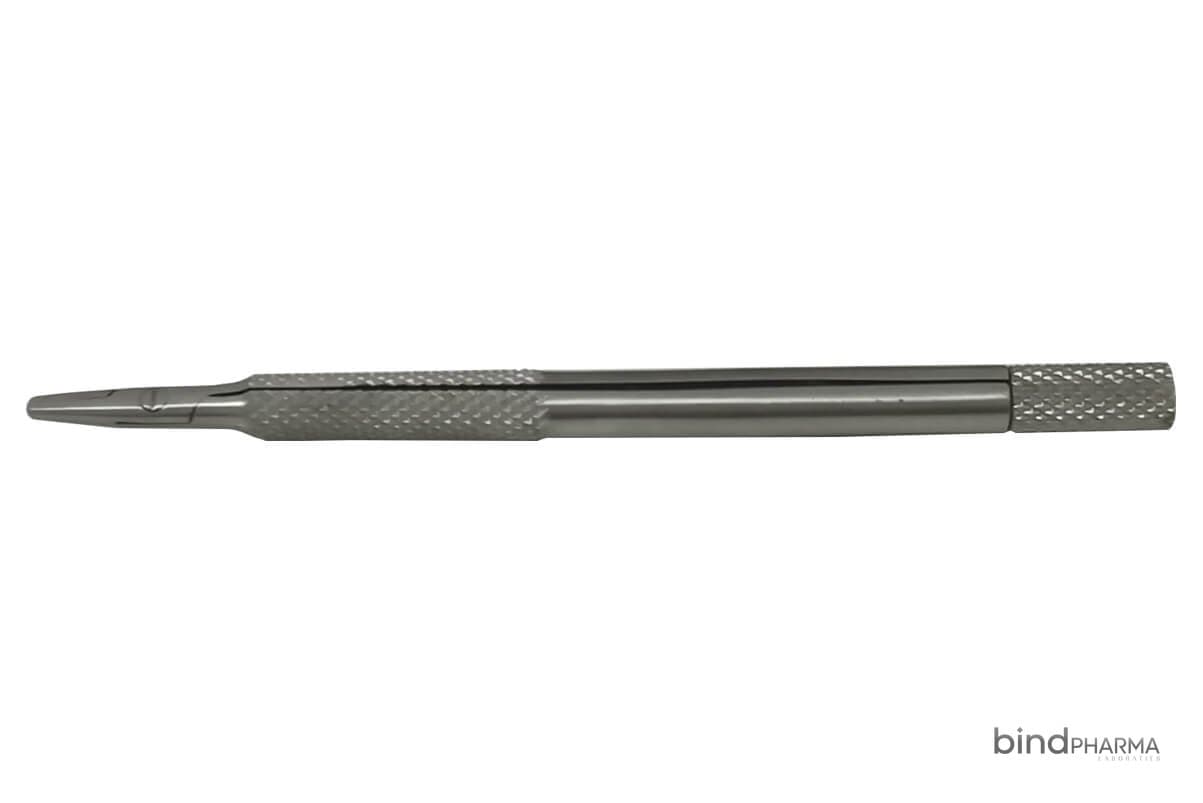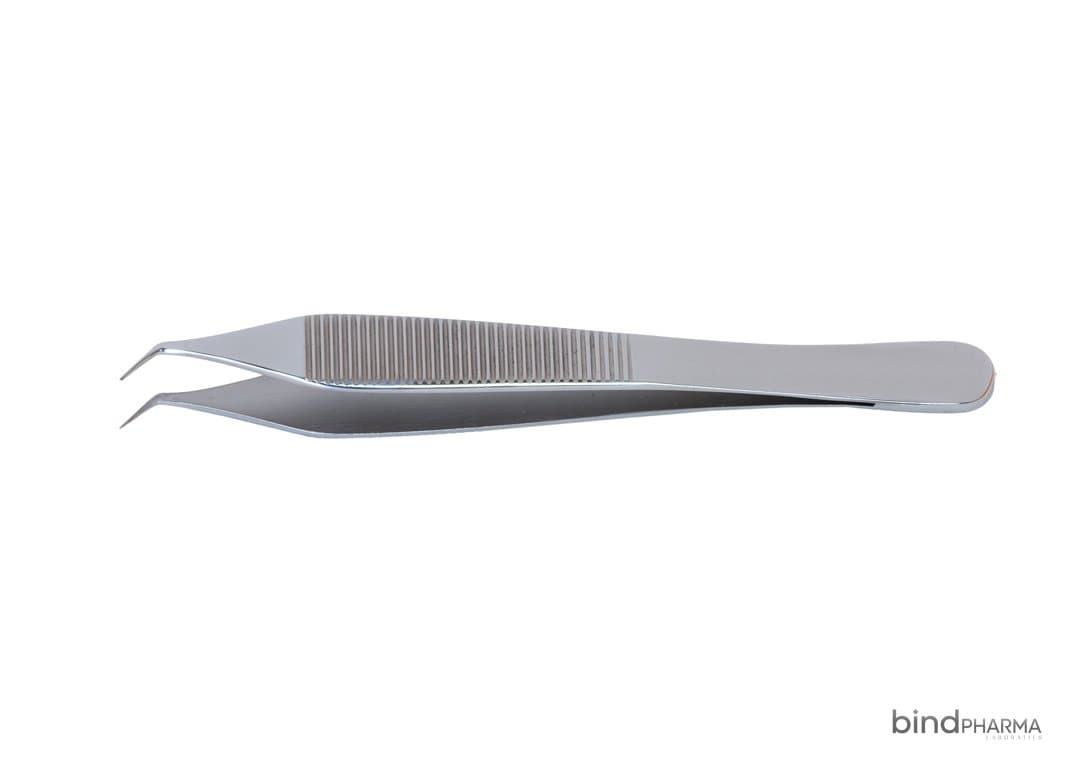
The recipient area is where a hair transplant is won or lost aesthetically. Extraction determines how many grafts survive; incision determines how natural they look. Sapphire blade incision techniques have become a defining part of modern practice precisely because the recipient site sets the angle, direction and density that the eye reads as natural. This guide looks at how the blade shapes those sites and what surgeons should demand from the instrument itself.
Why sapphire for recipient sites
Sapphire blades are crystalline rather than metallic, which allows them to be ground to a fine, symmetrical point with smooth lateral faces. The practical result is a clean, consistent incision that many surgeons find creates a snug channel around the graft. A well-fitted channel supports the follicle, may reduce popping and pooling, and can contribute to tidy healing.
The blade does not perform magic on its own. It is a tool that rewards good technique and punishes a rushed one. Understanding the geometry of the incision is what turns a good blade into a good result.
Matching blade width to graft calibre
The first technical decision is width. An incision should accommodate the follicular unit without leaving excess space that invites movement or slow healing.
- Narrower blades suit single-hair grafts along the hairline where fine, undetectable placement matters most.
- Wider blades suit multi-hair grafts placed behind the transition zone for density.
- Keeping a graduated set of widths lets the surgeon change channel size as the design moves from front to back.
Selecting width is a per-zone decision, not a per-case one. The best hairlines use a spectrum of channel sizes that mirror the natural gradient of follicle groupings across the scalp.
Controlling angle and direction
Angle is the single most important variable for natural appearance. Native hair emerges at an acute angle to the scalp, and incisions should replicate that angle faithfully.
Lateral, or coronal, incisions create sites oriented so hairs fan out side to side, which can enhance visual coverage and a flat, natural lie. Sagittal incisions run in line with hair direction and can make placement easier. Many surgeons combine approaches, using lateral incisions in the hairline for coverage and sagittal elsewhere. Whichever you favour, the blade must hold a stable edge so the angle you set is the angle you cut.
Depth control and the role of the handle
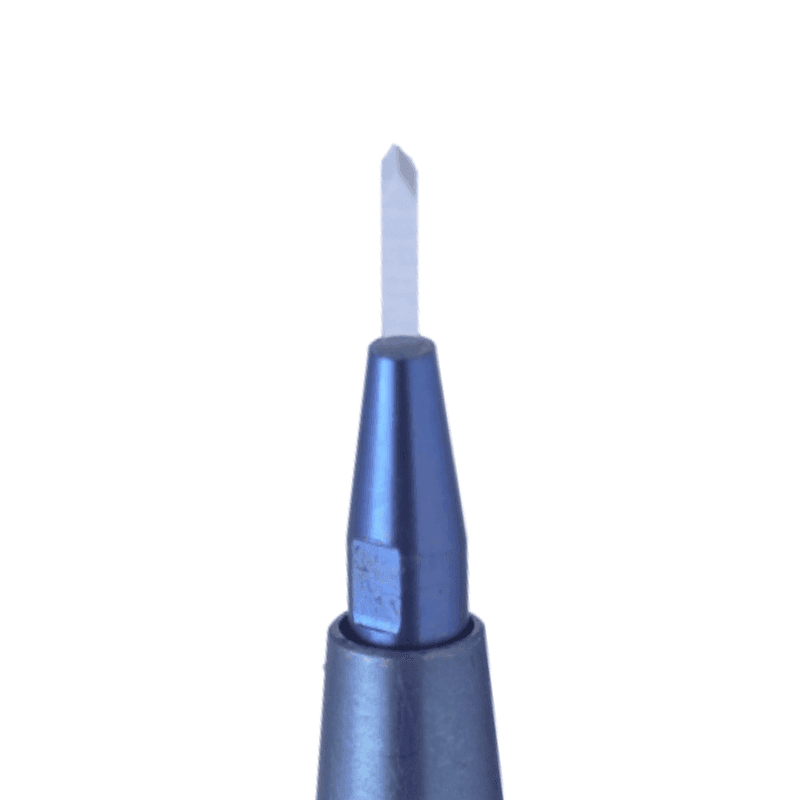
Depth determines whether the graft sits flush, buried or proud. Too shallow and grafts pop; too deep and they may be buried with poor growth. Sapphire blades are commonly paired with adjustable or fixed-depth handles so the surgeon can lock a consistent depth across hundreds of sites.
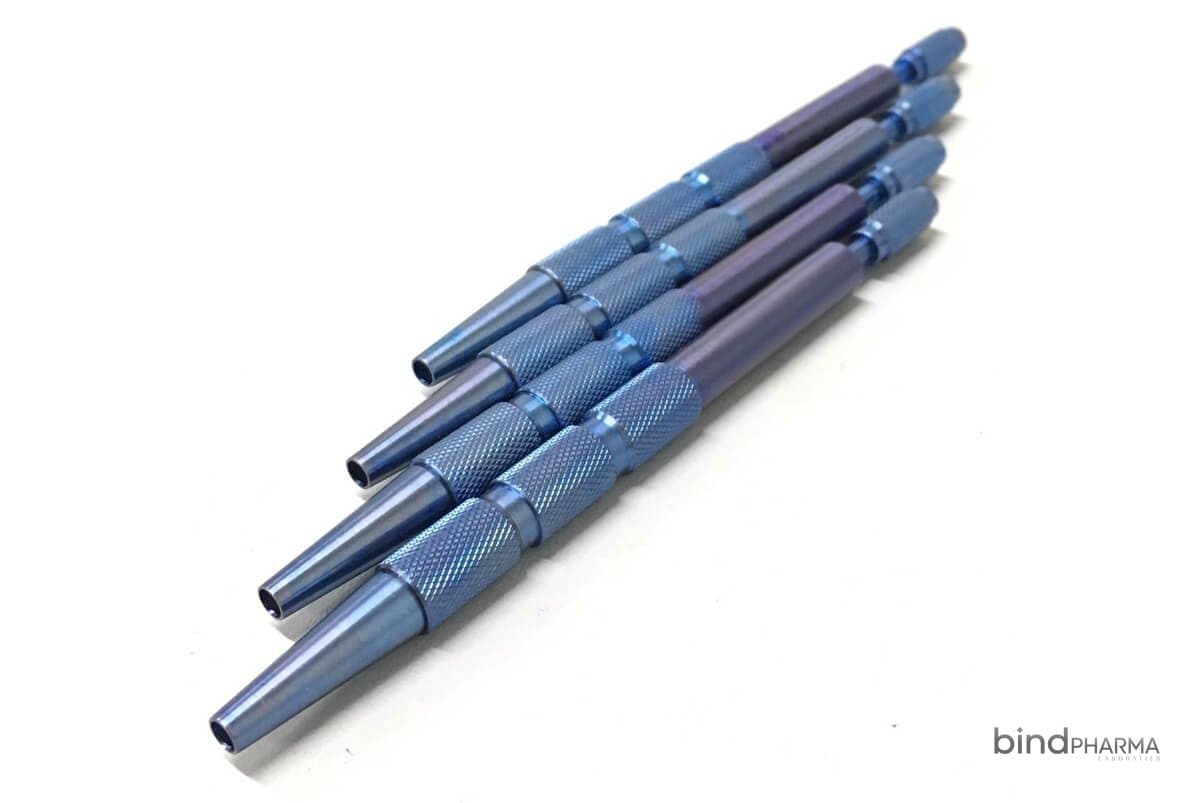
A quality handle is not a minor accessory. Blade wobble, an imprecise depth stop or a loose collet will translate directly into inconsistent sites. When evaluating a system, test the handle and blade together, because they perform as a unit.
Density and site distribution
Density is created by how sites are spaced, not by how large they are. Packing sites too tightly can compromise blood supply and healing, so experienced surgeons build density with disciplined spacing and by concentrating single grafts along the leading edge.
- Feather the hairline with irregular, single-graft sites to avoid a wall-like edge.
- Increase density gradually behind the transition zone.
- Respect vascular limits rather than chasing a density figure that risks poor survival.
The blade enables this artistry by making each incision predictable, so the surgeon can focus on distribution rather than fighting the instrument.
Edge quality is the hidden variable
Even perfect technique fails on a poor blade. A sapphire edge that chips, or one ground asymmetrically, produces ragged incisions that heal less cleanly and fit grafts poorly. Under magnification, a quality blade shows a symmetrical, unblemished point and smooth faces. This consistency, blade after blade, is what lets a surgeon trust muscle memory across a long case.
Because the recipient phase can involve hundreds of incisions in a single session, blade sharpness must hold from the first site to the last. Premature dulling forces the surgeon to press harder, which degrades angle and depth control exactly when precision matters most.
Building a reliable blade supply
Recipient-site technique is only as consistent as the blades behind it. Variability between batches is the enemy of reproducible results, which is why clinics benefit from sourcing sapphire blades and matched handles from a supplier that holds tight tolerances and stable specifications.
Hair Restoration Supplies provides sapphire blades in a range of widths alongside compatible titanium handles for clinics that want dependable, repeatable recipient-site work. Request our catalogue or a sample evaluation to test edge quality and handle feel against the technique your surgeons already trust.