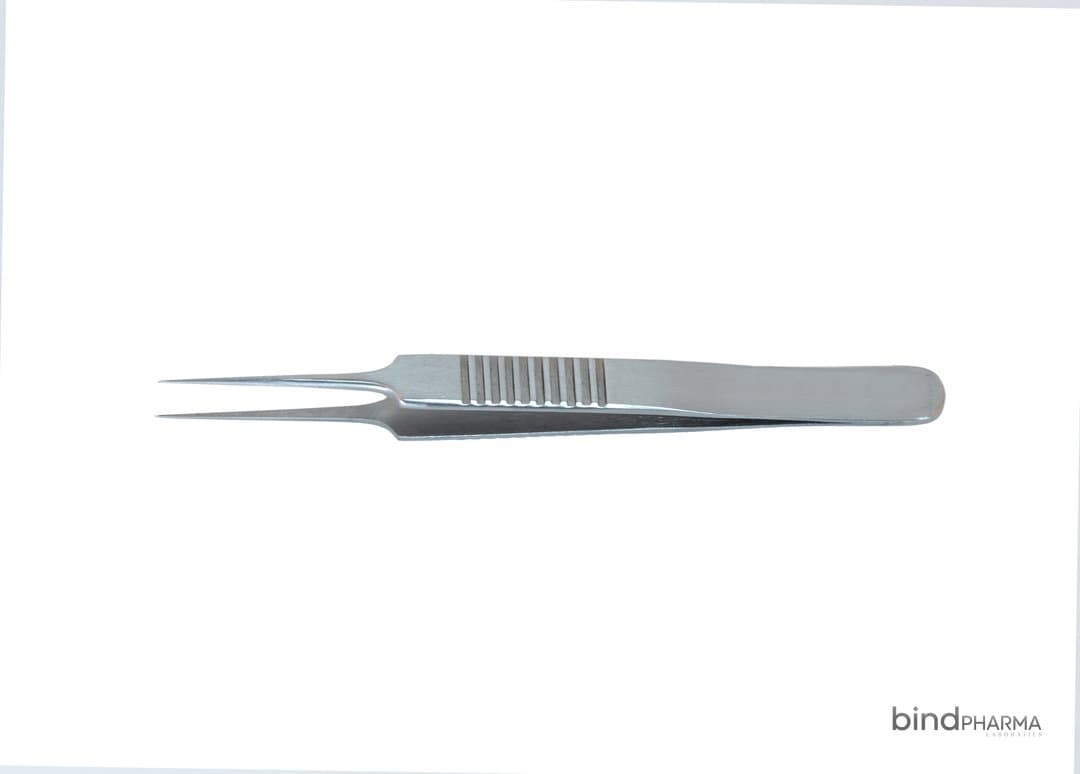
Forceps are the instruments that touch grafts most, which makes them quietly decisive for survival. Careful FUE forceps selection is one of the simplest ways a clinic can protect follicles from mechanical trauma between extraction and placement. Yet forceps are often bought as an afterthought, chosen by price rather than by the specific job each pair does. This guide explains how to choose forceps that handle grafts gently and keep your team efficient.
Two jobs, two forceps
The most common mistake is treating all forceps as interchangeable. In an FUE workflow, grafts pass through two distinct handling phases that call for different tools.
Extracting forceps grasp and lift the loosened follicular unit from the donor scalp after the punch has scored around it. They need a grip that holds the graft securely without crushing the delicate bulb. Transplanting, or implanting, forceps place the graft into the recipient channel, guiding it to the correct depth and angle. Their tips are shaped for controlled release into a small incision.
Using one pair for both jobs compromises at least one of them. Serious clinics stock both.
Tip geometry and grip
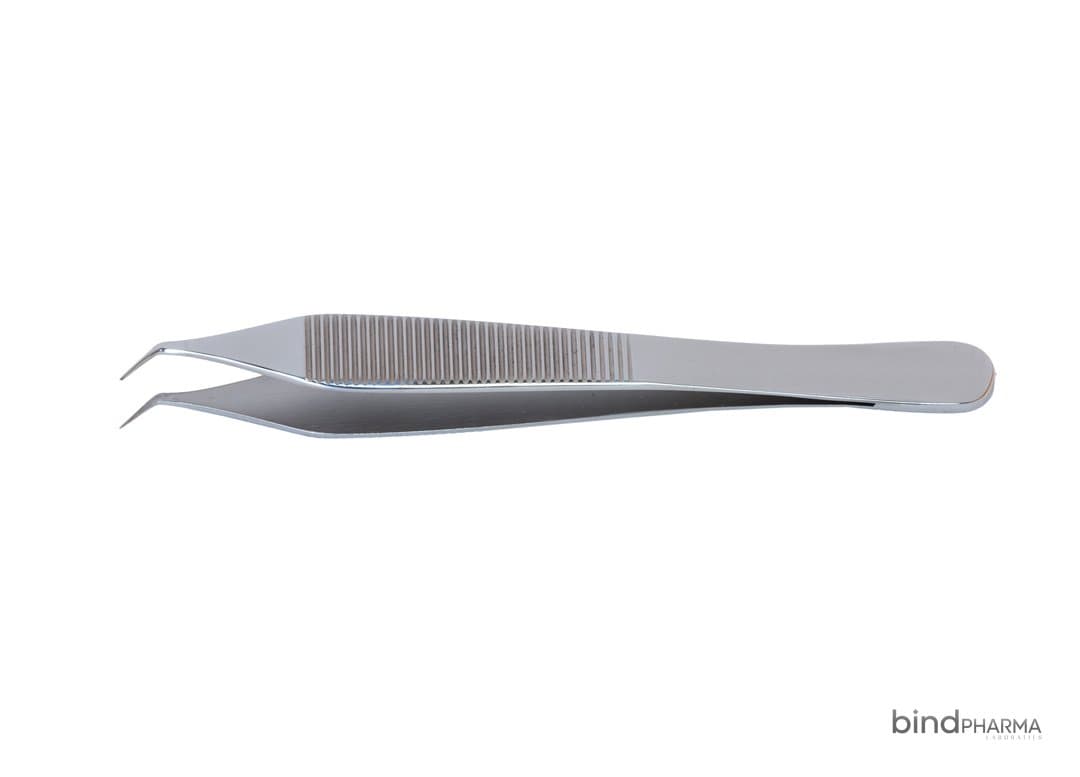
The tip is where forceps succeed or fail. It must apply enough friction to control the graft without exerting crushing pressure on the follicle. Several design features contribute:
- Fine, precisely aligned tips that meet cleanly along their full length.
- A tip surface or texture that grips the graft's connective tissue rather than the bulb.
- Just enough tip width to control the graft without obscuring the surgeon's view.
Tips that are misaligned, too coarse or too blunt force the operator to squeeze harder, and that squeeze is transmitted straight into the follicle. Under magnification, quality forceps show tips that close evenly with no gap and no overlap.
Weight, balance and fatigue
Forceps are held for the entire duration of extraction and placement, so ergonomics matter. A well-balanced pair with appropriate spring tension reduces the effort of each close, which lowers hand fatigue across a long session. Overly stiff forceps tire the hand and reduce fine control; overly loose ones fail to hold grafts reliably. The right tension feels controlled and repeatable hundreds of times in a row.
Lightweight materials help here. Some clinics prefer titanium forceps for their reduced weight during prolonged use, while others favour quality stainless for its rigidity and value.
Angled versus straight tips
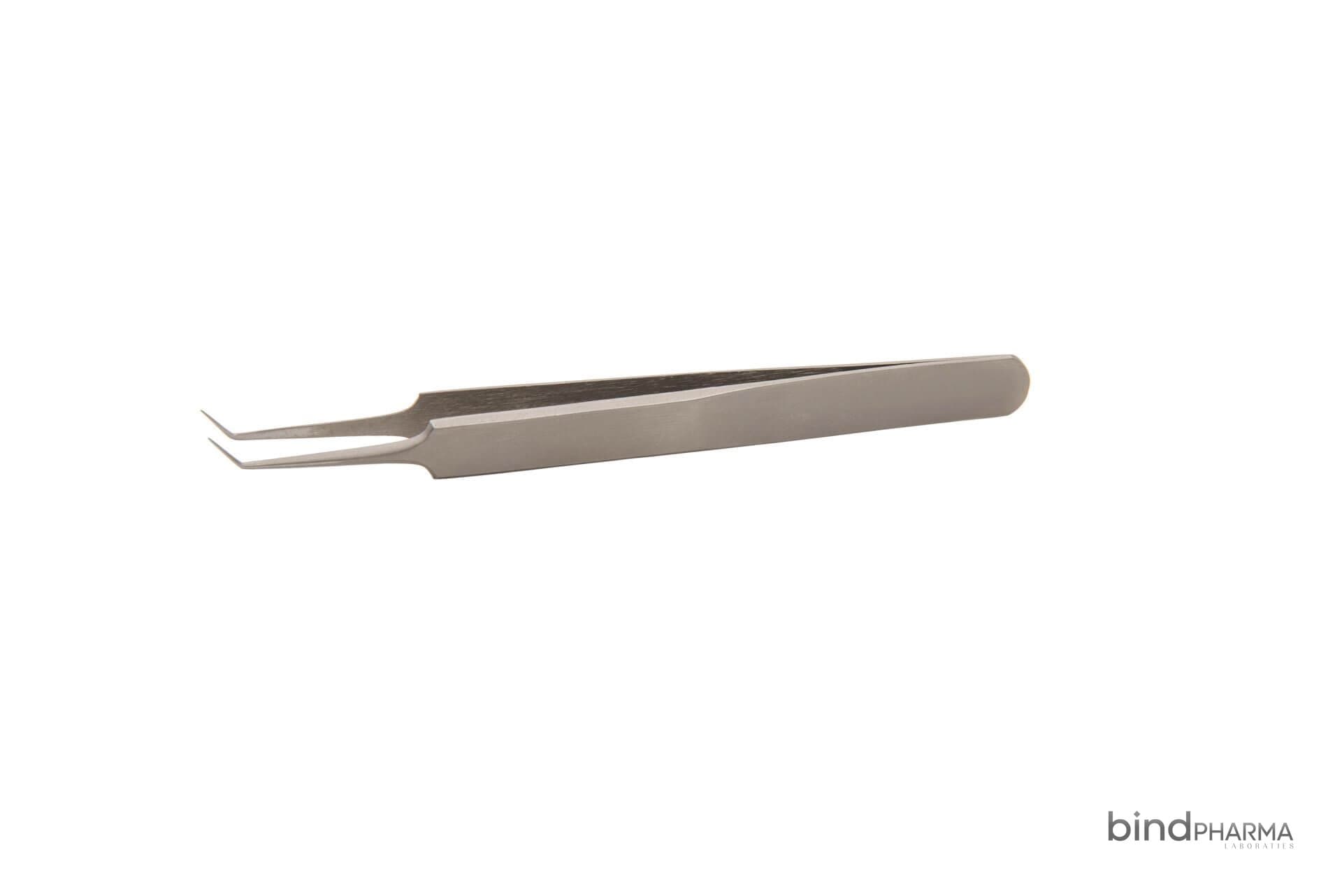
Tip orientation affects access and visibility. Angled forceps can improve the operator's line of sight to the recipient site and make placement at acute angles easier, which is why many surgeons prefer them for transplanting. Straight forceps offer directness and are often favoured for extraction. Keeping both styles available lets each team member work in the configuration that suits their hand and technique.
Surface finish and reprocessing
Forceps endure the same reprocessing cycle as every other instrument, and their fine tips are vulnerable. A quality surface finish resists corrosion and pitting, while precisely machined tips retain their alignment through repeated autoclaving. Inspect forceps regularly under magnification, because a bent or sprung tip that no longer closes cleanly will damage grafts long before it is obvious to the naked eye. Retire forceps whose tips no longer meet correctly rather than persisting with a compromised pair.
Building a forceps set for your team
A well-equipped FUE room does not rely on a single pair. It provides:
- Dedicated extracting forceps sized for confident donor lifting.
- Dedicated transplanting forceps with tips suited to your channel sizes.
- Both straight and angled options so operators can match tool to task.
- Enough pairs in rotation to cover reprocessing without slowing throughput.
Standardising these across the team means every technician handles grafts with instruments of the same quality and feel, which supports consistent survival regardless of who is placing.
Choosing a forceps supplier
Because tip precision is the whole point of a forceps, sourcing from a supplier that holds tight machining tolerances is worth the attention. Cheap forceps with poorly aligned tips are a false economy that shows up as graft damage you can never fully trace.
Hair Restoration Supplies offers both extracting and transplanting forceps in straight and angled configurations, machined for clean tip alignment and gentle graft control. Request our catalogue or a sample pair so your team can test grip, balance and tip precision against the forceps you use today.